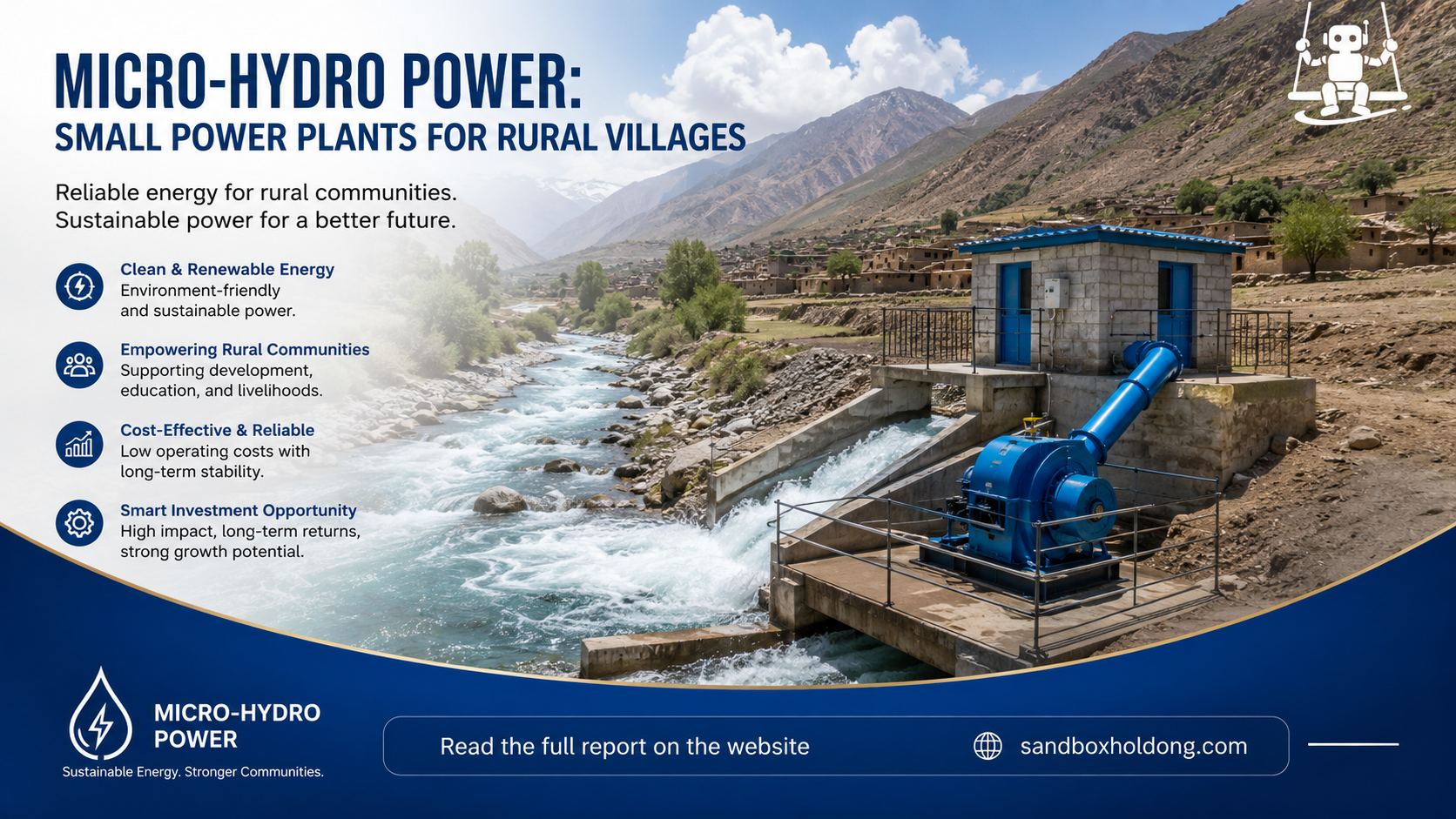
Access to reliable electricity remains one of the biggest challenges for many rural communities in Afghanistan. While major cities continue to expand their energy infrastructure, thousands of villages still face limited or unstable access to power. This growing energy gap is creating strong opportunities for alternative energy solutions, particularly micro-hydro power systems.
Micro-hydro power refers to small-scale hydroelectric systems that use flowing water from rivers or streams to generate electricity for local communities. These systems are smaller and more affordable than large dams and power plants, making them highly suitable for rural and mountainous regions.
As global demand for renewable energy continues to rise, micro-hydro projects are emerging as an important investment opportunity in Afghanistan’s energy sector.
Why Investors Are Paying Attention
Energy demand in Afghanistan continues to grow as businesses, schools, clinics, and households require more stable electricity for daily operations and economic development.
Many rural communities still depend on:
- Diesel generators
- Solar systems with limited capacity
- Imported electricity
- Traditional fuel sources
Micro-hydro systems offer a more sustainable and long-term solution for villages located near rivers and water streams.
Several factors are increasing investor interest in this sector:
- Growing demand for rural electricity
- Rising fuel and diesel costs
- Increasing focus on renewable energy
- Long-term operational stability
- Low operating costs after installation
- Government and NGO interest in rural electrification
Unlike large energy projects, micro-hydro systems can often be developed faster and with lower capital requirements.
Afghanistan’s Competitive Advantage
Afghanistan’s geography creates strong natural conditions for hydroelectric energy production. Many provinces contain rivers, streams, and mountainous terrain suitable for small hydro systems.
The country’s rural landscape makes decentralized energy solutions especially valuable because extending national power grids to remote villages is often expensive and difficult.
Afghanistan also benefits from:
- Natural water resources in several regions
- Growing local technical skills
- High demand for off-grid electricity
- Increasing interest in renewable infrastructure
These factors create favorable conditions for long-term investment in micro-hydro development.
The Real Opportunity: Beyond Electricity
While electricity generation is the core business, the broader economic impact of micro-hydro systems creates additional business opportunities.
Reliable power can help support:
- Small factories
- Agricultural processing
- Cold storage facilities
- Internet and communication services
- Schools and healthcare centers
- Rural businesses and workshops
As electricity access improves, local economies often experience increased productivity and business activity.
This creates opportunities not only for energy investors, but also for entrepreneurs operating in sectors that depend on stable electricity.
Business Models and Investment Areas
Micro-hydro investment opportunities exist across multiple areas of the value chain, including:
- Power plant development
- Equipment supply
- Installation and engineering services
- Maintenance operations
- Rural energy distribution
- Community-based energy management
Some projects may operate through:
- Private ownership
- Public-private partnerships
- Community partnerships
- NGO-supported development models
Businesses that combine technical expertise with strong local partnerships may achieve greater long-term success.
Growing Global Interest in Renewable Energy
Renewable energy continues to receive global attention as countries and investors seek cleaner and more sustainable energy solutions.
Micro-hydro systems are increasingly viewed as attractive because they offer:
- Low carbon emissions
- Long operational life
- Stable energy generation
- Lower environmental impact compared to large dams
International development organizations and energy investors are also showing increasing interest in rural renewable infrastructure projects in emerging markets.
This trend may create future funding and partnership opportunities for local energy developers.
Why This Industry Matters for Afghanistan
Micro-hydro power can play an important role in Afghanistan’s long-term economic development.
The sector has the potential to support:
- Rural electrification
- Economic growth
- Job creation
- Renewable energy development
- Reduced fuel dependency
- Improved education and healthcare access
Access to electricity is often one of the most important foundations for economic growth and community development.
In many rural regions, small power systems may provide more realistic and cost-effective solutions than expanding large national grid systems
Challenges Investors Should Consider
Despite its strong potential, the sector still faces several challenges:
- Initial infrastructure costs
- Seasonal water flow changes
- Technical maintenance requirements
- Rural transportation and logistics
- Limited financing access
- Regulatory and licensing processes
However, many of these challenges also create opportunities for businesses capable of building professional systems and long-term operational strategies.
The Importance of Local Partnerships
Successful micro-hydro projects often depend on strong local cooperation.
Projects that involve local communities tend to achieve:
- Better operational stability
- Improved maintenance
- Higher long-term sustainability
- Stronger community support
Building trust with local stakeholders is often as important as the technical side of the project itself.
Companies that combine engineering expertise with strong community engagement may gain a significant advantage in the market.
Future Outlook
Demand for reliable electricity in Afghanistan is expected to continue growing over the coming years, especially in underserved rural regions.
As renewable energy technology becomes more affordable and accessible, micro-hydro systems may become one of the most practical solutions for village-level electrification.
The businesses most likely to succeed in this sector will not necessarily be the largest companies, but those that successfully combine:
- Technical expertise
- Local partnerships
- Reliable maintenance systems
- Sustainable financing models
- Long-term operational planning
Final Thoughts
Micro-hydro power is emerging as one of Afghanistan’s most practical and sustainable rural infrastructure investment opportunities.
The sector combines:
- Growing energy demand
- Renewable energy potential
- Long-term operational value
- Rural economic impact
- Infrastructure development opportunities
For investors interested in renewable energy, infrastructure, and emerging markets, micro-hydro power represents both a commercial opportunity and a long-term development solution.
As Afghanistan continues modernizing its economy and infrastructure, small-scale rural energy systems may become an increasingly important part of the country’s future energy landscape.
Explore Emerging Investment Opportunities
Sandbox Holding continues to explore high-potential business and investment opportunities across sectors, shaping the future of Afghanistan’s economy.
From infrastructure and renewable energy to agriculture, technology, logistics, and industrial development, our Business Journal highlights market insights, industry trends, and strategic opportunities for investors, entrepreneurs, and business leaders seeking long-term growth in emerging markets.
Stay connected with Sandbox Holding for more insights into the industries driving the next generation of economic development.