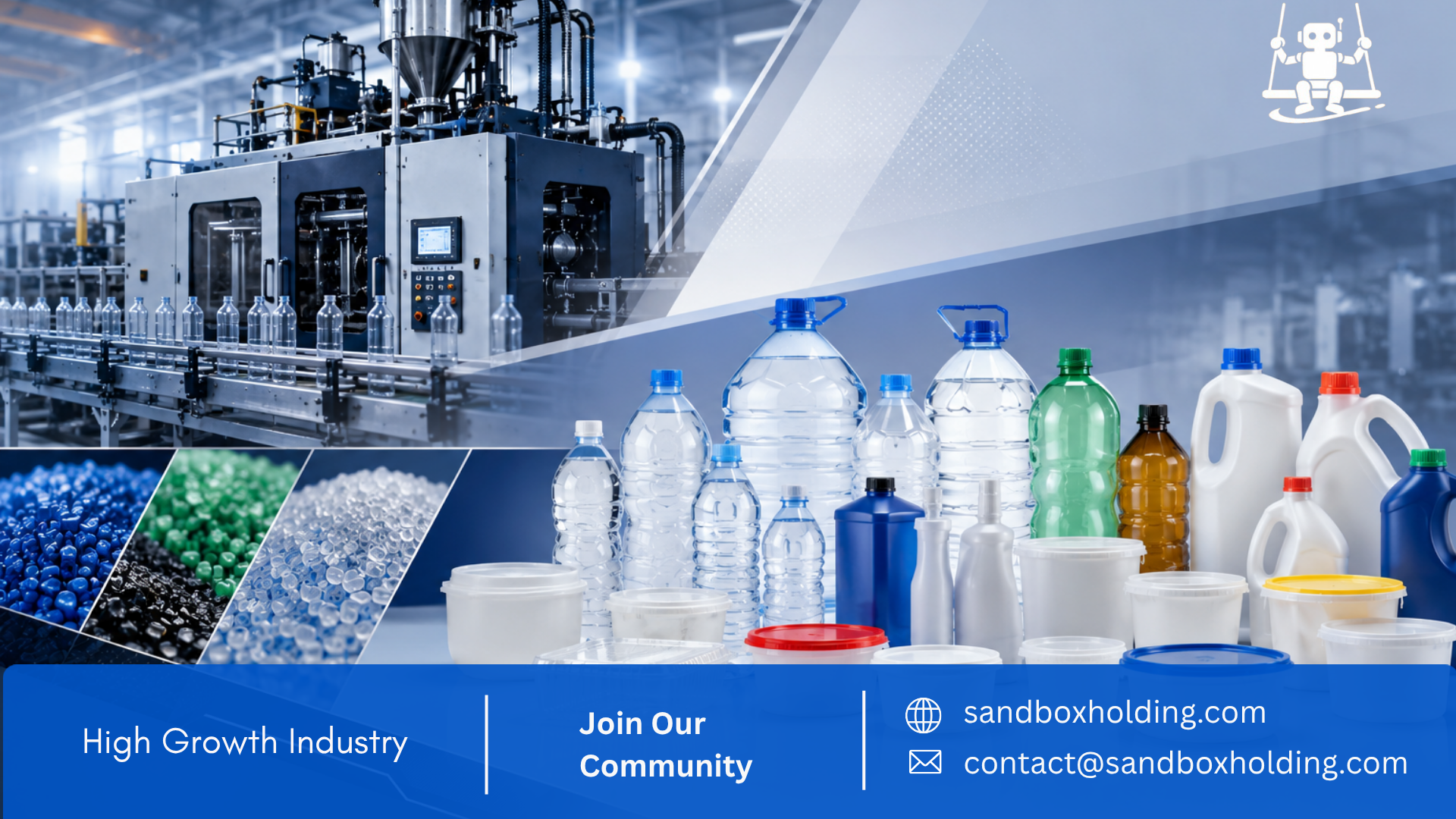
As Afghanistan’s consumer market continues to grow, demand for plastic packaging products is increasing across industries such as food, beverages, dairy, pharmaceuticals, cosmetics, and household goods.
From water bottles and yogurt containers to cooking oil packaging and takeaway food containers, plastic packaging has become an essential part of modern consumer industries. Yet despite this growing demand, Afghanistan still depends heavily on imported packaging products from neighboring countries.
This creates a significant opportunity for local investors to enter the market through plastic container manufacturing, packaging production, and industrial supply systems.
Unlike many industries that depend on temporary trends, packaging is directly connected to daily consumption. As more Afghan consumers move toward branded and packaged products, the demand for reliable local packaging suppliers is expected to increase steadily.
Today, many local businesses already require:
• plastic bottles,
• food containers,
• caps,
• industrial containers,
• and customized packaging solutions.
This includes:
• water factories,
• dairy brands,
• restaurants,
• food processors,
• cosmetic companies,
• and household product manufacturers.
One of the strongest advantages of this industry is that it serves many sectors at the same time. Instead of depending on a single market, packaging manufacturers can supply products to dozens of industries simultaneously.
The research also shows that Afghanistan’s economy is gradually becoming more consumer-driven, especially in urban areas. Population growth, rising urbanization, supermarket expansion, food delivery services, and local brand development are increasing the use of packaged products throughout the country.
This shift is important because every consumer product requires packaging.
As local beverage and food companies continue growing, the demand for:
• PET bottles,
• yogurt containers,
• takeaway packaging,
• detergent bottles,
• and food-grade plastic products
is expected to rise significantly over the next decade.
However, the strongest opportunities may not come from producing every type of packaging. Investors are more likely to succeed by focusing on a specific niche market first, such as:
• bottled water packaging,
• dairy containers,
• food packaging,
• or industrial plastic containers.
A focused strategy may reduce operational complexity while helping businesses build stronger customer relationships and production efficiency.
One of the major advantages for local manufacturers is faster supply. Many Afghan businesses currently face delays and high transportation costs when importing packaging materials. A local supplier capable of delivering products quickly and consistently may gain a major competitive advantage.
At the same time, the industry also faces several important challenges.
Plastic manufacturing machinery requires stable electricity and continuous production capacity. In Afghanistan, power shortages remain one of the biggest industrial risks. For this reason, many investors may need to consider hybrid energy systems combining:
• solar power,
• grid electricity,
• and generator backup systems.
Afghanistan’s strong solar potential, especially in regions such as Kandahar, Herat, and Balkh, may create long-term advantages for industrial solar energy solutions.
Raw materials such as PET resin, HDPE, and polypropylene still need to be imported, meaning businesses remain exposed to:
• currency fluctuations,
• import logistics,
• and international supply chain risks.
Competition from imported packaging products, especially from Pakistan and Iran, also creates pricing pressure in the market. However, local companies may still compete successfully through:
• faster delivery,
• custom production,
• better customer service,
• and stronger reliability.
Another important factor is quality. As Afghan brands become more professional, companies increasingly demand:
• food-grade packaging,
• better bottle design,
• stronger materials,
• and more consistent product quality.
This creates opportunities for professionally managed factories capable of maintaining industrial standards.
The research suggests that the most realistic business model for Afghan investors may be gradual industrial expansion.
The first stage may involve:
• packaging distribution,
• import partnerships,
• and understanding customer demand.
The second stage may focus on:
• bottle blowing,
• plastic molding,
• and local production of high-demand packaging products.
As operations grow, businesses may later expand into:
• custom mold manufacturing,
• branded packaging solutions,
• industrial-scale production,
• and regional supply networks.
The long-term outlook for this industry appears promising because packaging demand grows alongside economic activity and consumer spending. As Afghanistan develops more local food, beverage, and consumer brands, the need for reliable packaging infrastructure is expected to grow as well.
The businesses most likely to succeed will not necessarily be the factories with the cheapest products, but the companies that combine:
• consistent quality,
• reliable supply,
• operational efficiency,
• energy management,
• and strong customer relationships.
Plastic packaging manufacturing may ultimately become one of Afghanistan’s most scalable industrial sectors because it supports multiple industries simultaneously while benefiting directly from the country’s growing consumer economy.